Storyteller. Yogi. Warrior.
Host. Artist. Human.
I've spent most of my career in rooms where people need to think together – leadership teams, cross-sector multi stakeholder initiatives, conferences, training programmes. The contexts vary. What doesn't is this: the quality of what comes out depends on the quality of how people meet.
My work is to create the conditions for quality outcomes. Where people can be fully present with what is. Where the whole room contributes, not just the confident voices. Where people truly see and listen to each other. And where people connect over what really matters.
When that happens, trust builds. Decisions get clearer. People follow through.
When we get the human part right,
the results we seek come naturally.
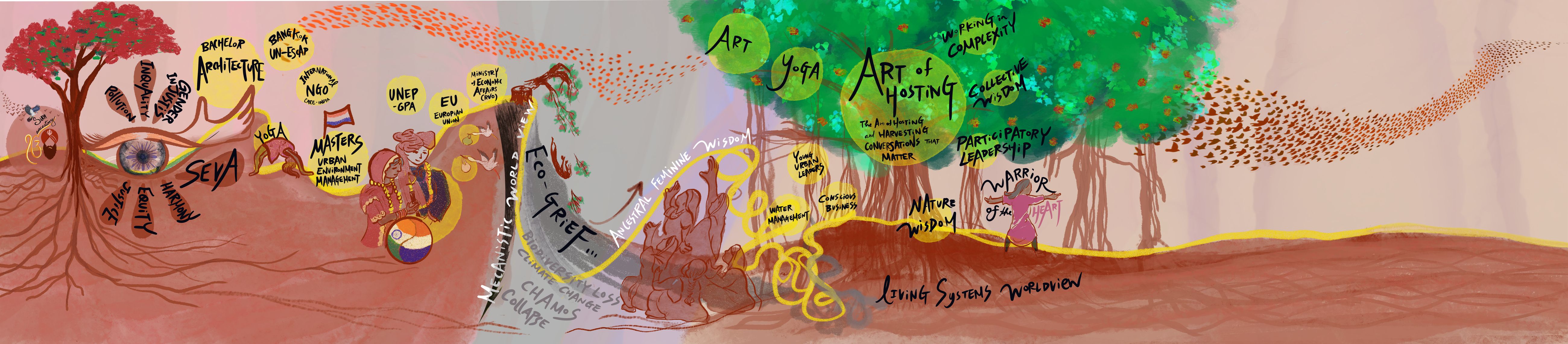

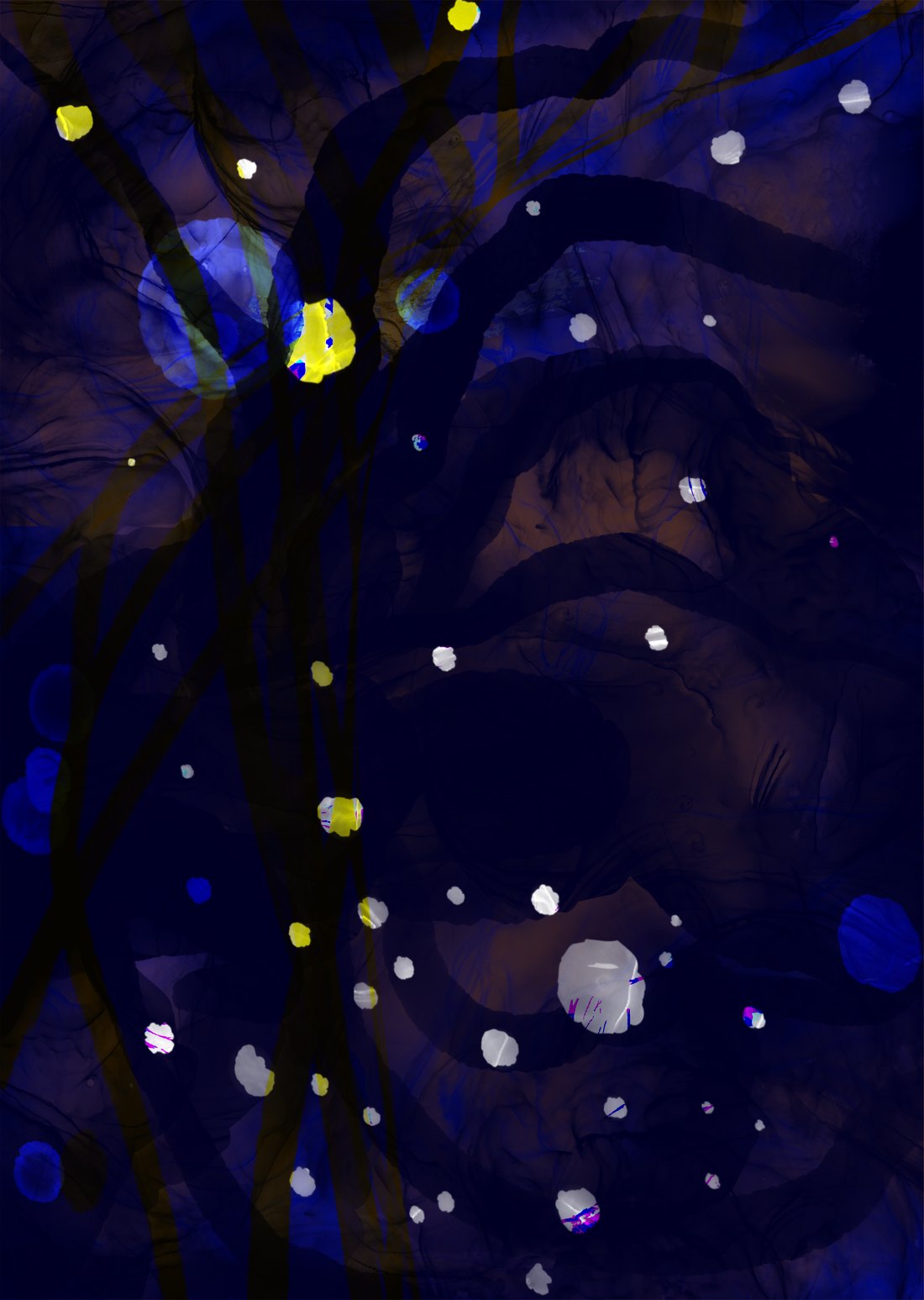
Drag the drawing, or use the arrows – hover over the yellow circles.
This drawing was co-created by Riyo Harata and Mansi Jasuja. Riyo's listening to Mansi's life story brought the first layers of the drawing to appear.
I came to this work through an unusual path. I trained as an architect in India, then as an urban environmental manager in the Netherlands. I grew up surrounded by colours, rituals, layered stories in India, and have spent the past two decades in Europe working with people, communities and systems in transition.
My career has spanned UN agencies, EU programmes, international NGOs and government ministries – researching, designing policy, managing programmes, navigating bureaucracy and many of the 'isms'.
So I know well how complex organisations think. Their constraints. Their politics. Their tendency to default to the same old formats. And I also know why those formats so often fail.
2008 was a turning point. An awakening – both uncomfortable and lifechanging. I became overwhelmed by eco-grief. I'd been working inside these systems for years and something wasn't adding up for our living world. So I went looking for a different way of doing things – and found the Art of Hosting. Its living systems worldview – one that sees organisations, communities, and ecosystems as living, interconnected wholes – brought clarity and understanding of what I had been missing. It opened a portal into deep practice, a way of working that gave me the tools, language, and courage to help others reimagine and reshape the systems we live within.
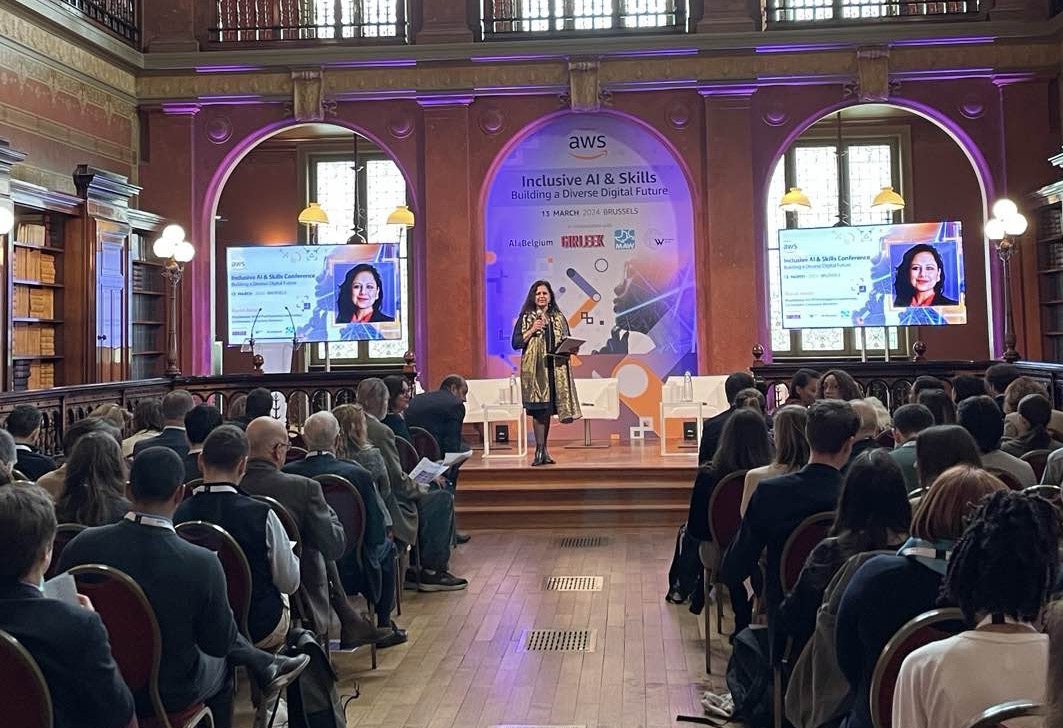
I grew up in India – in all its diversity – as part of a minority community, within a deeply colonised educational system – and I've spent the last 25 years living and working in the Netherlands.
Working across cultures isn't something I learned but how I exist in the world.
This shapes everything I do. I'm at home in the in-between – in stories that don't sit in neat categories, because my own never has.
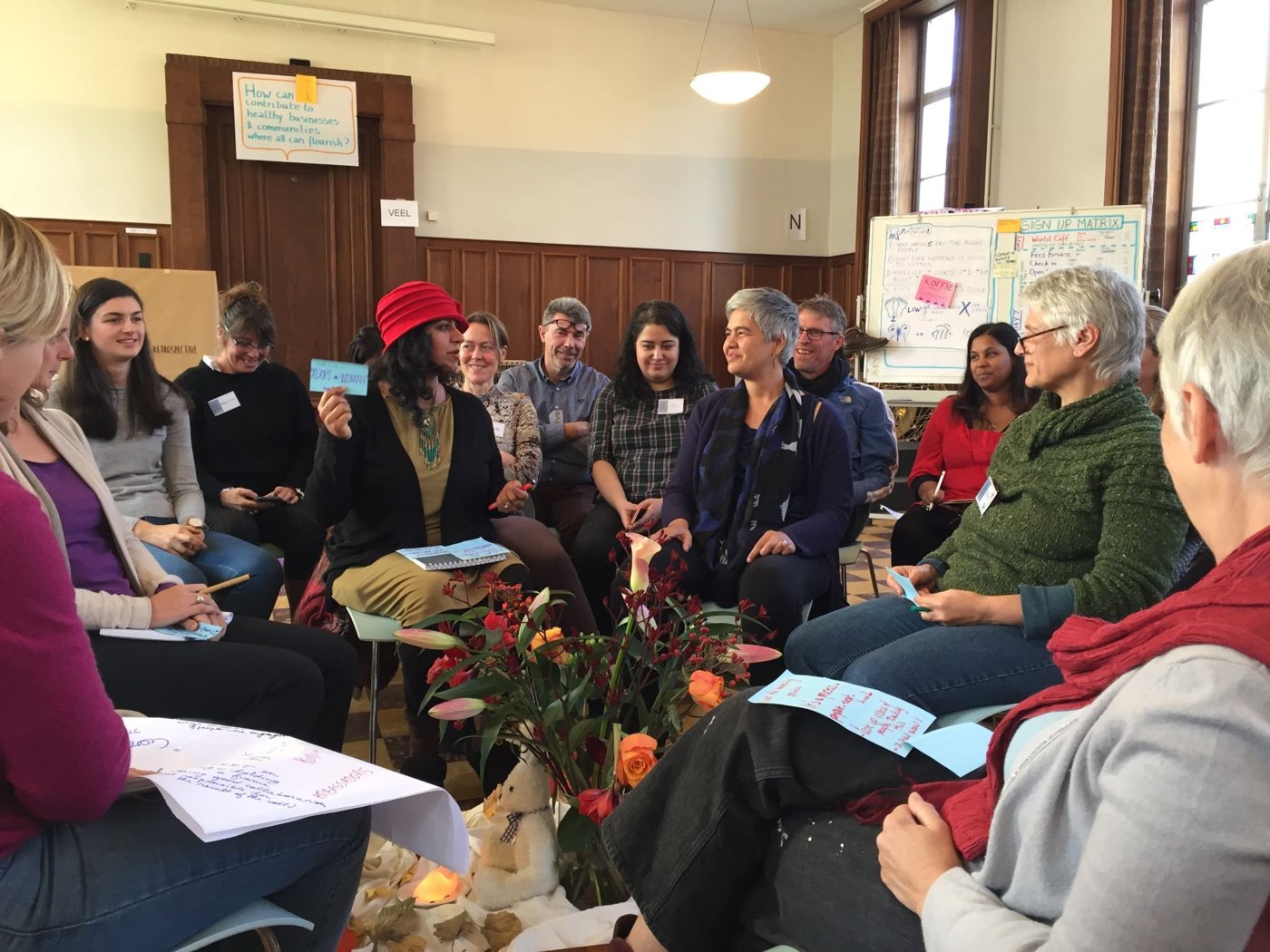
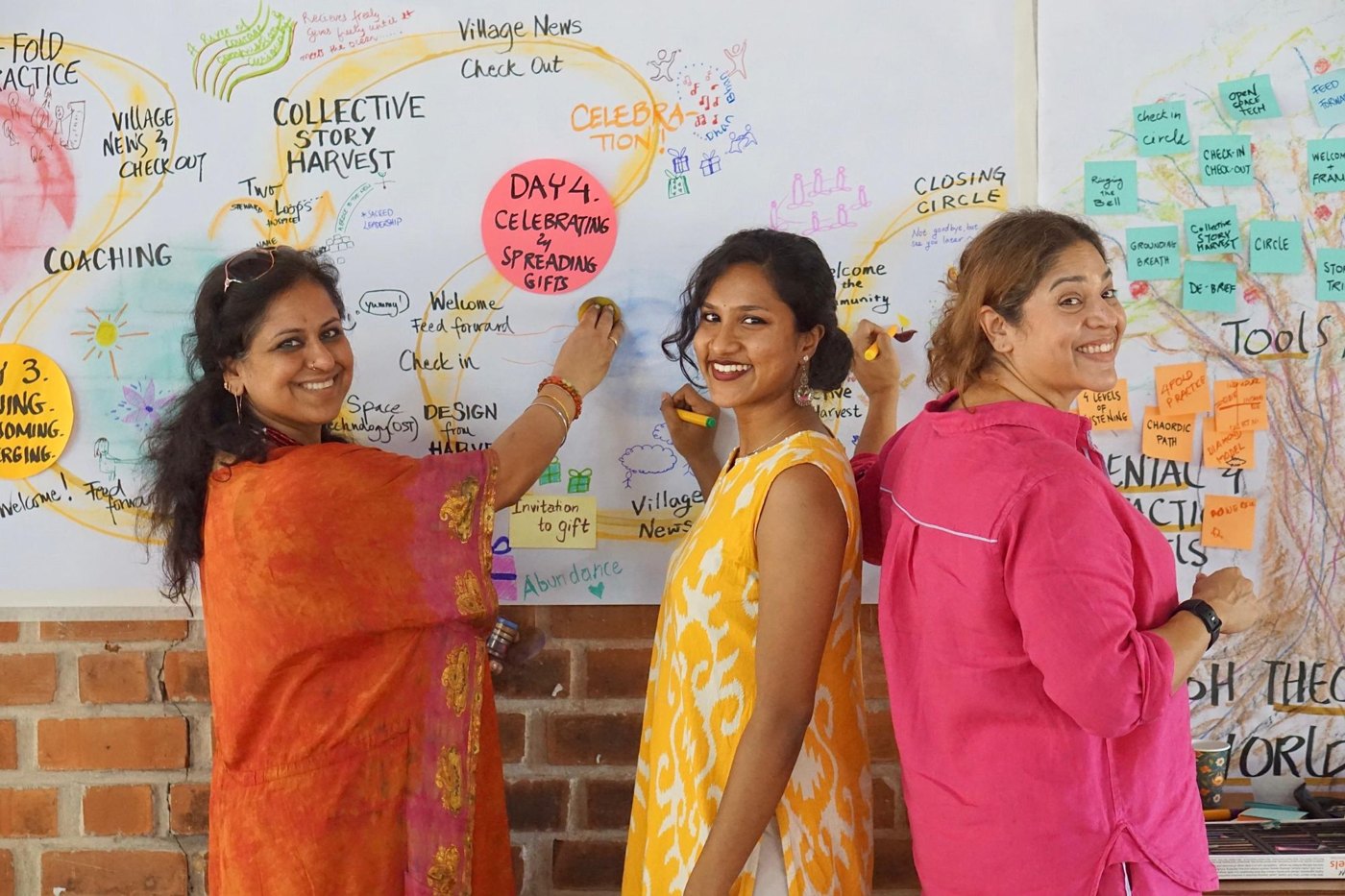
Art of Hosting is a global community of practitioners – trainings on every continent, a shared worldview, and a growing body of tools and methods. And as one of its core principles: Never Host Alone.
When one person is managing a room, you can't give due attention to both the process and the people. So we work in teams. One host holds the structure, while another reads the energy and notices what's not being said. But this isn't about two being enough in every situation - it's about not hosting alone.
Larger groups require more relational capacity to stay in good communication and care with everyone in the room. Hosts, Harvesters and participants scale together - always a minimum of two, and expanding as needed to match the complexity of the work. The more complex the work, the more senses you need. That's how you catch what one person would miss.
This community is a living practice – we train together, reflect together, learn together, and grow our collective wisdom. Working in rapidly shifting times of uncertainty and complexity, we continually strengthen how we work and show up. For each project and context, I bring together different collaborators – visual harvesters, trainers, process designers and fellow hosts – each offering distinct skills, perspectives and ways of sensing what a room or system needs. This diversity allows the work to stay responsive, creative and grounded in real-time learning.
When you work with me, you get that global network too – a mycelium of practitioners from across the world.
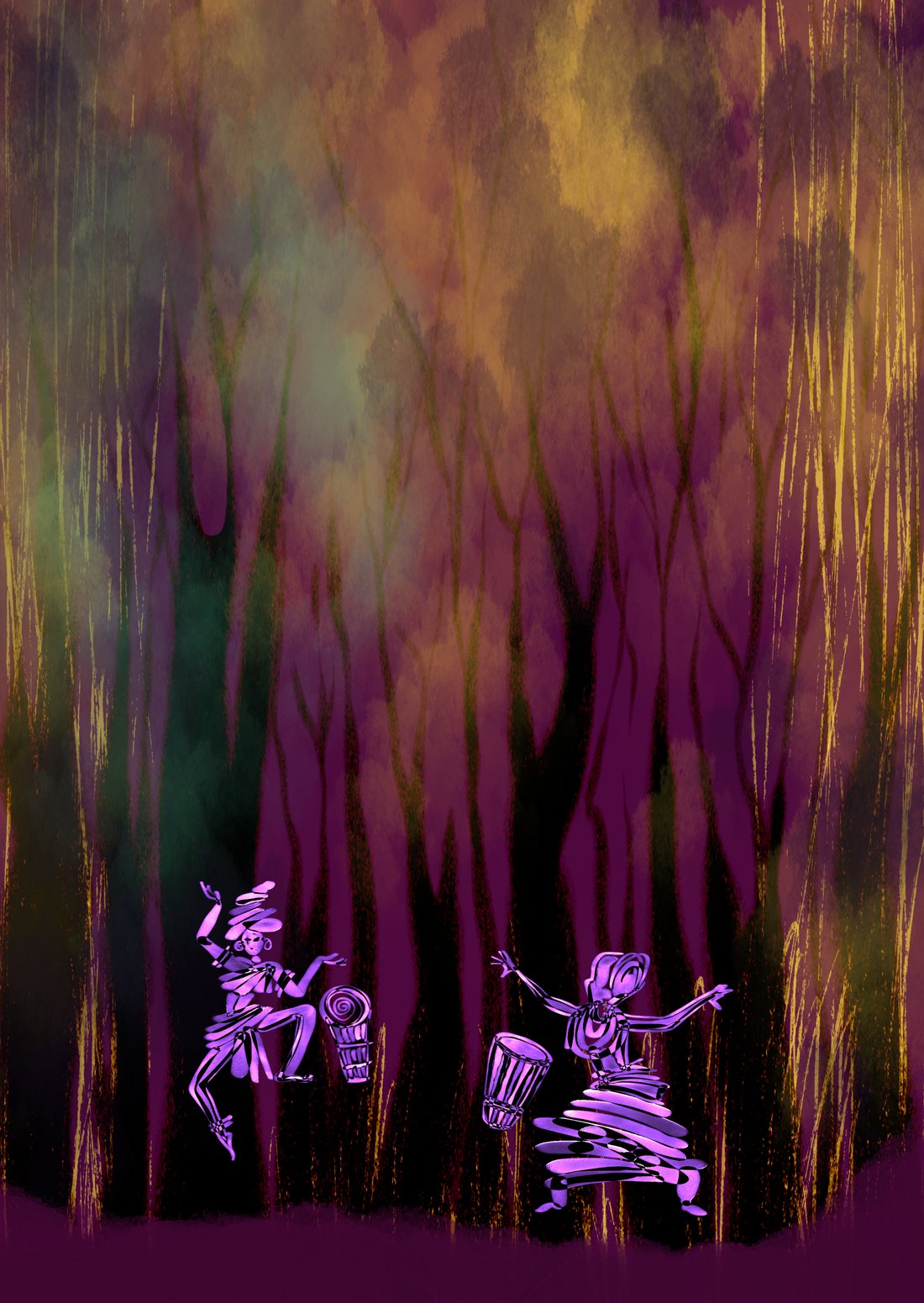
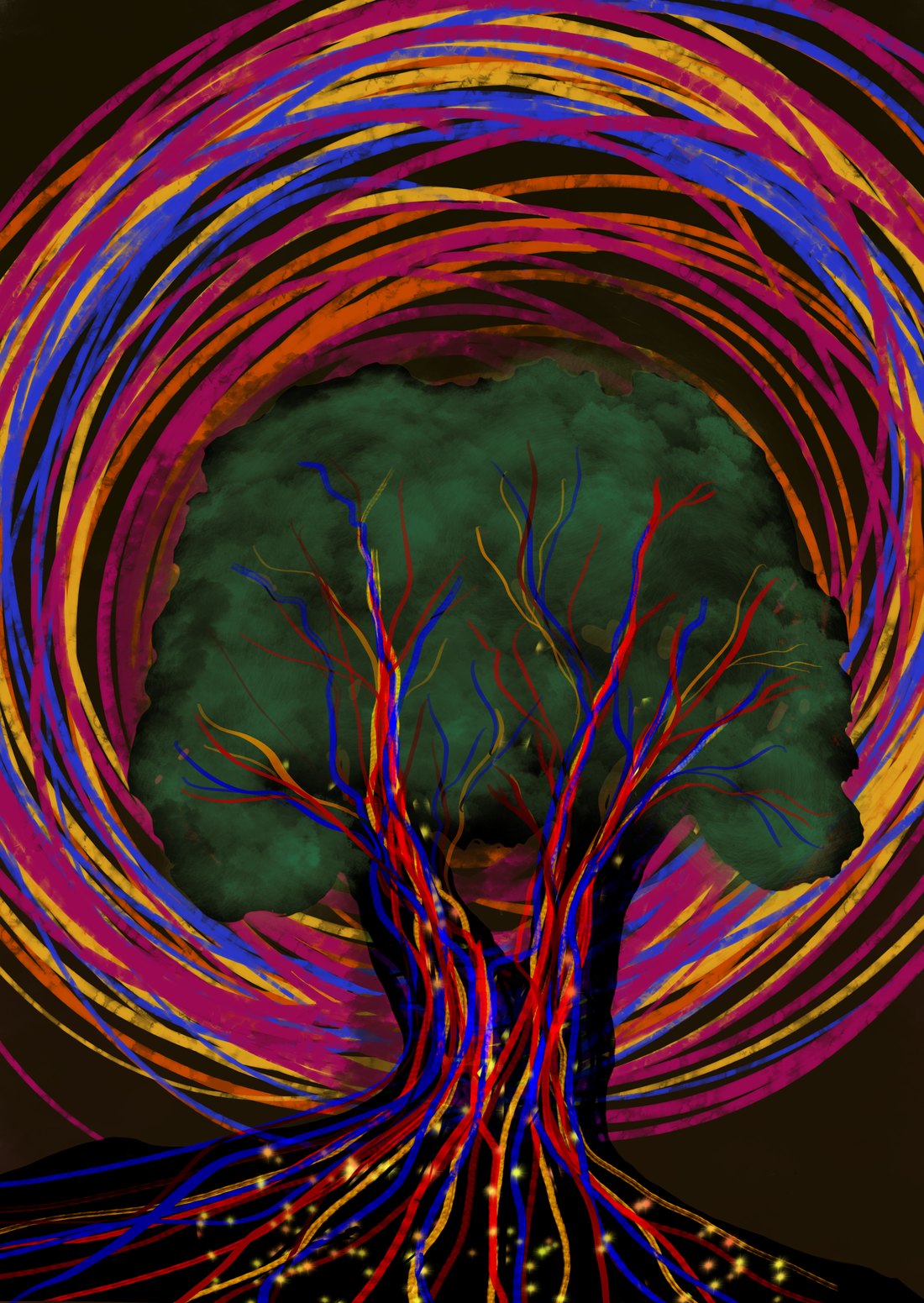


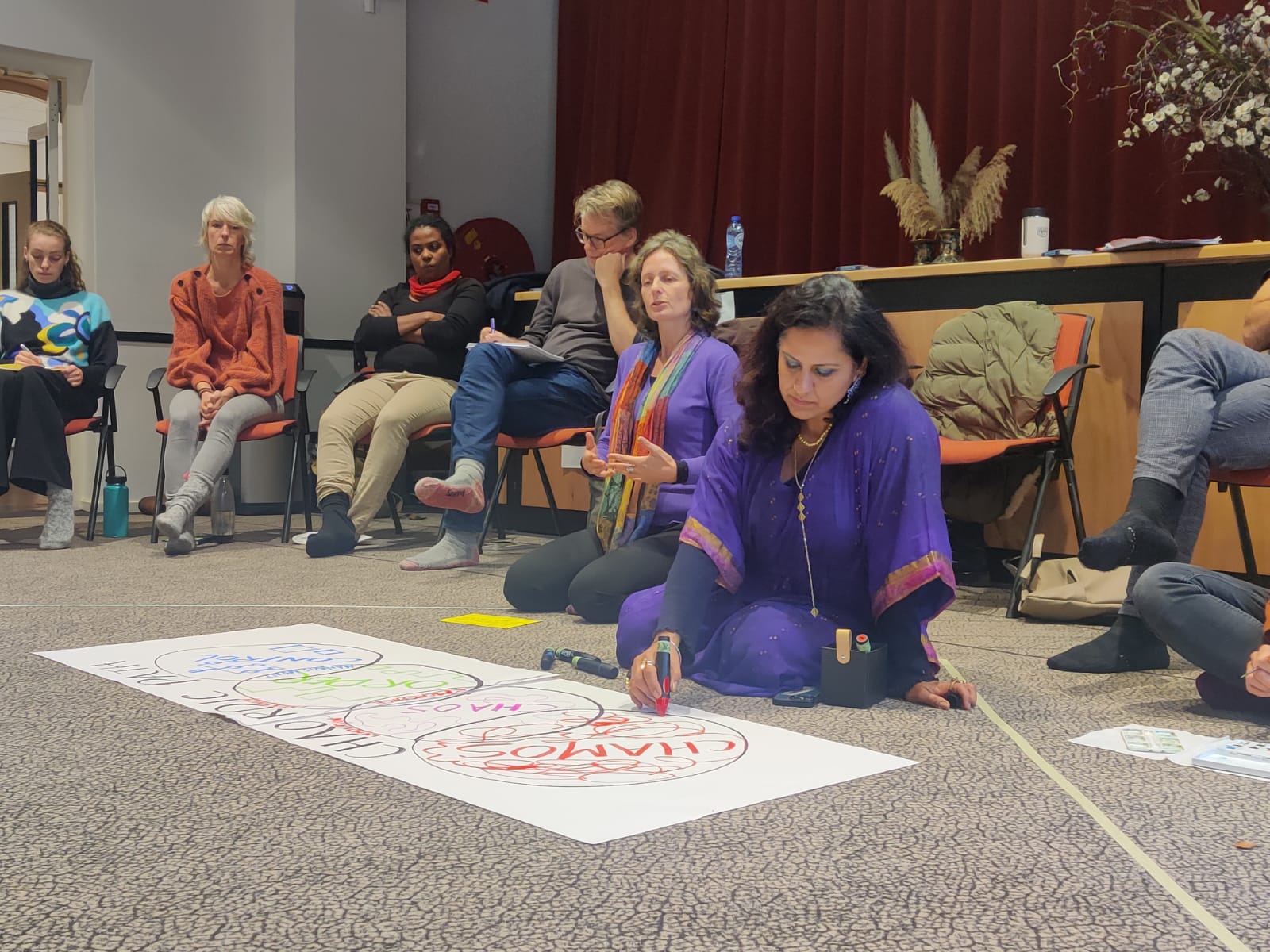
Good conversations deserve more than minutes and action points. Harvesting is the practice of noticing, capturing, and making meaning from what happens in a room. It turns dialogue into tangible outputs, shared outcomes, and lasting impact. We design with the whole arc in mind – from intention to impact, guided by purpose. Harvesting isn't just about what we can measure or produce. When we decolonise what we call 'results' and value the unseen things - like relationships, insights and feelings - we help the visible results grow stronger. That's where real, lasting change starts.
I work with different forms of harvesting, most often as an artist and visual harvester. I capture what happens in conversations through drawing, graphic recording, sensemaking artefacts and by hosting participatory collective harvest. It's not for decoration or entertainment, but it helps groups see patterns, remember what emerged and carry the work forward.
My artistic practice is rooted in listening and sense-making. It lives in the spaces between: pauses, metaphors, relational movement, the shape of a conversation. I care deeply about the invisible threads that shape how we relate to each other and the living world. Art has a subtle yet profound power to surface what needs to be seen, felt and transformed.
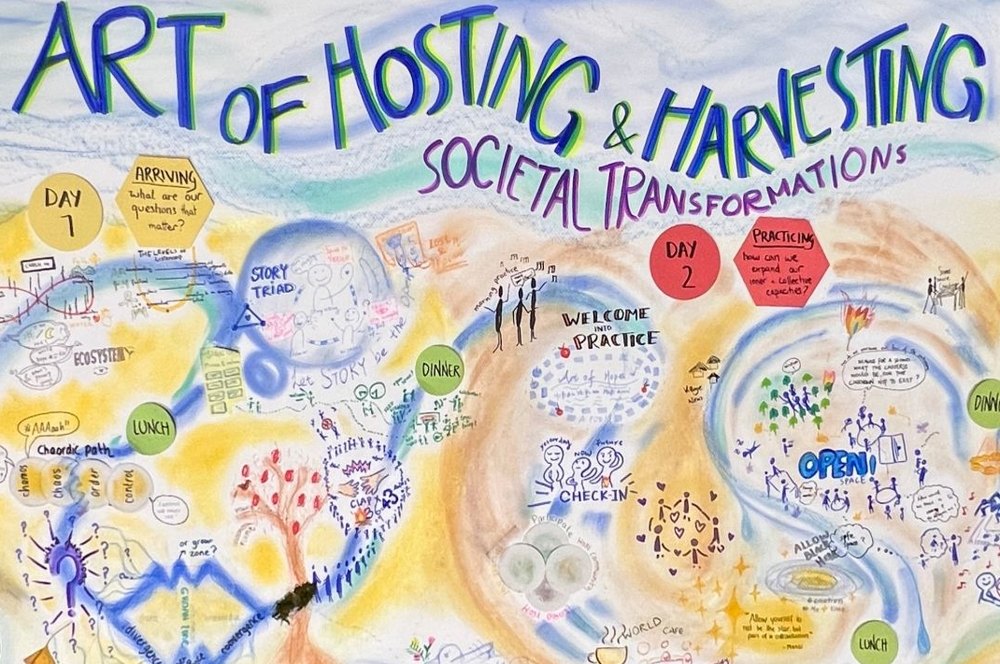
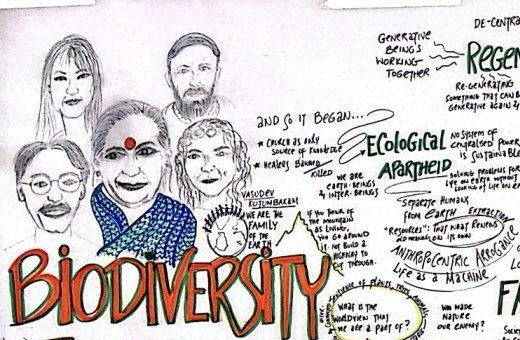
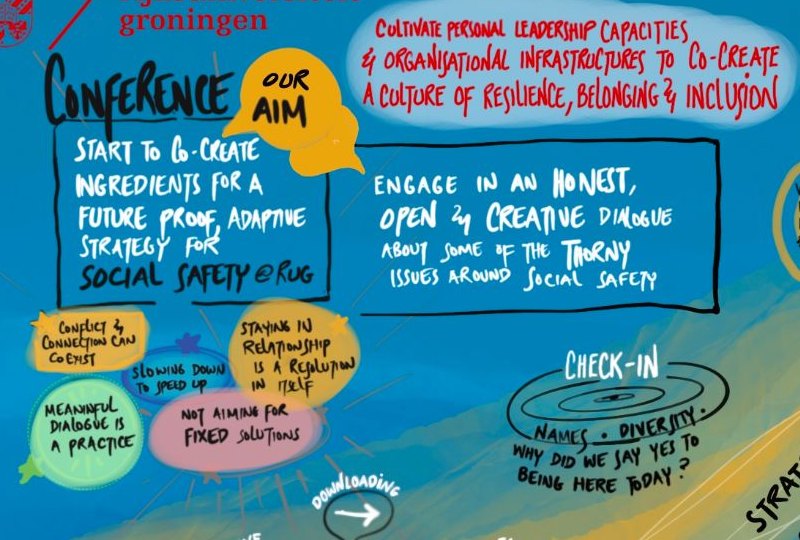
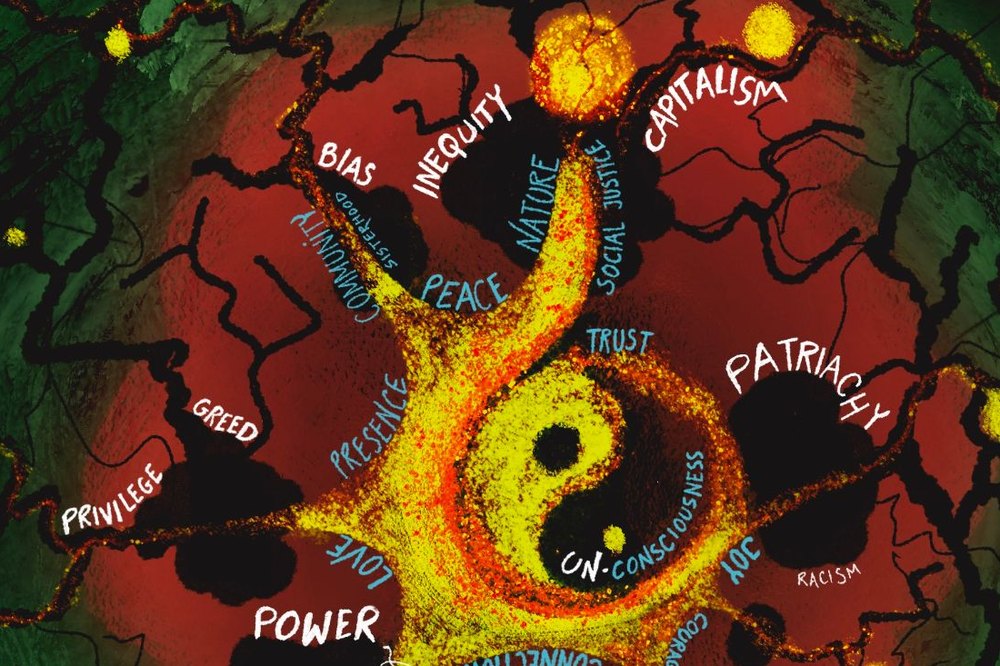
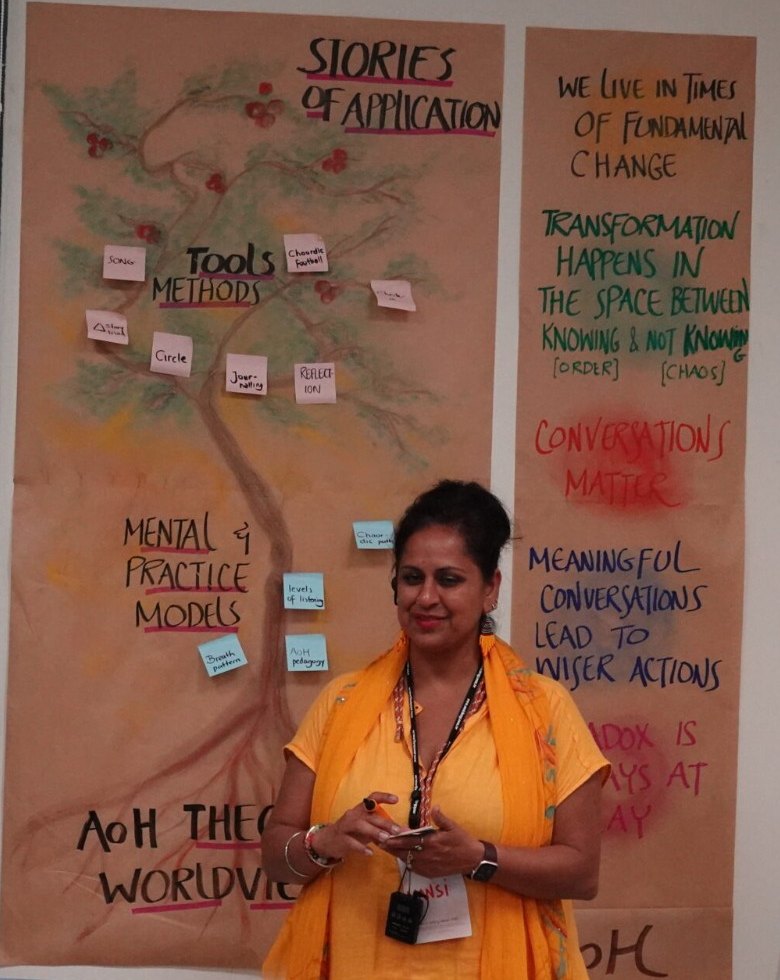
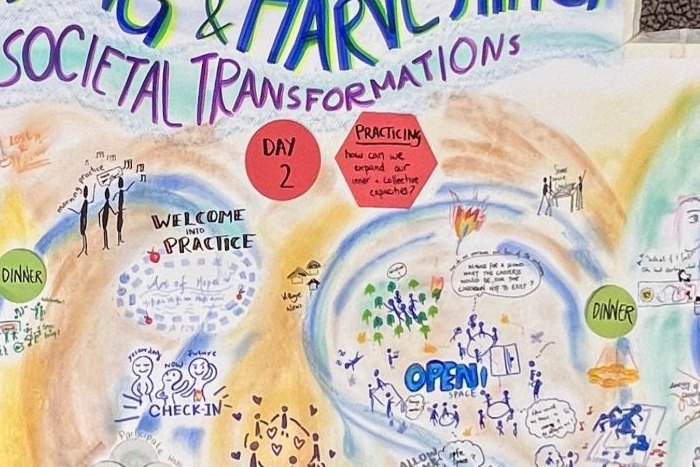
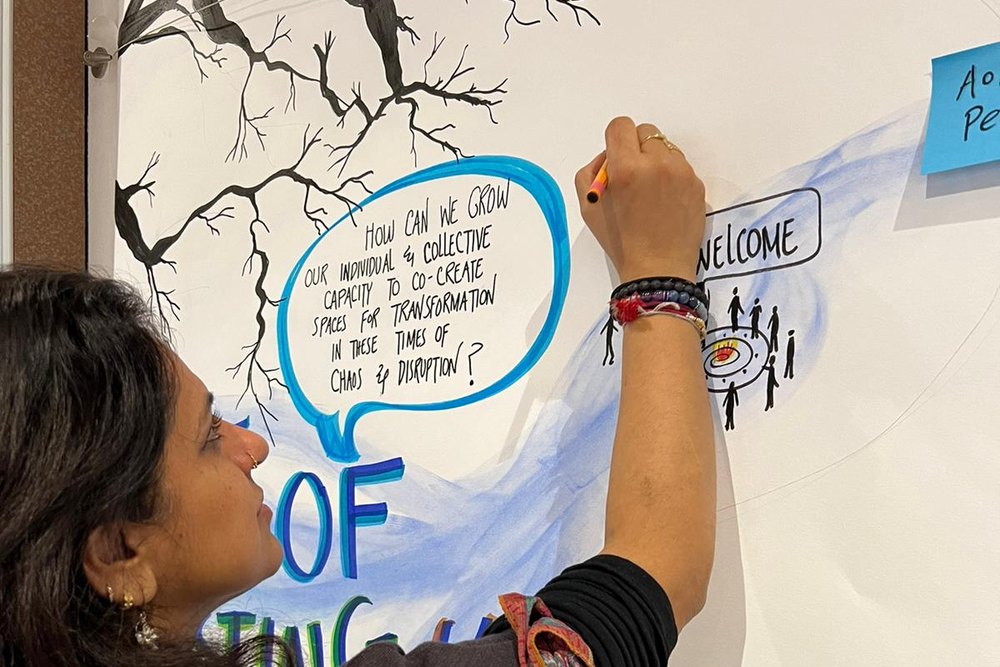
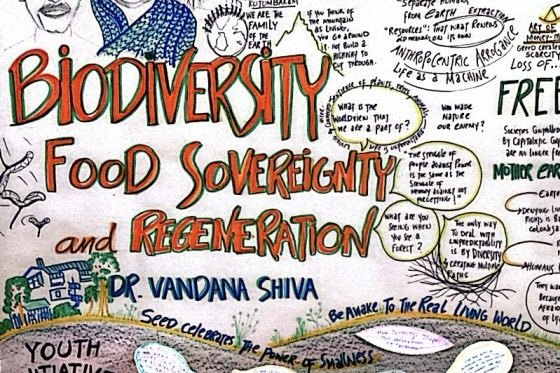
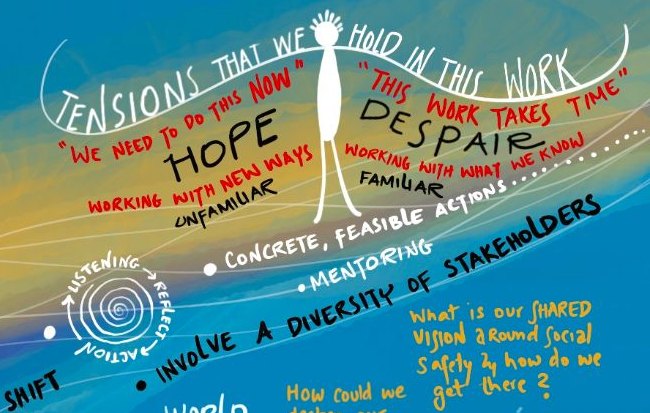
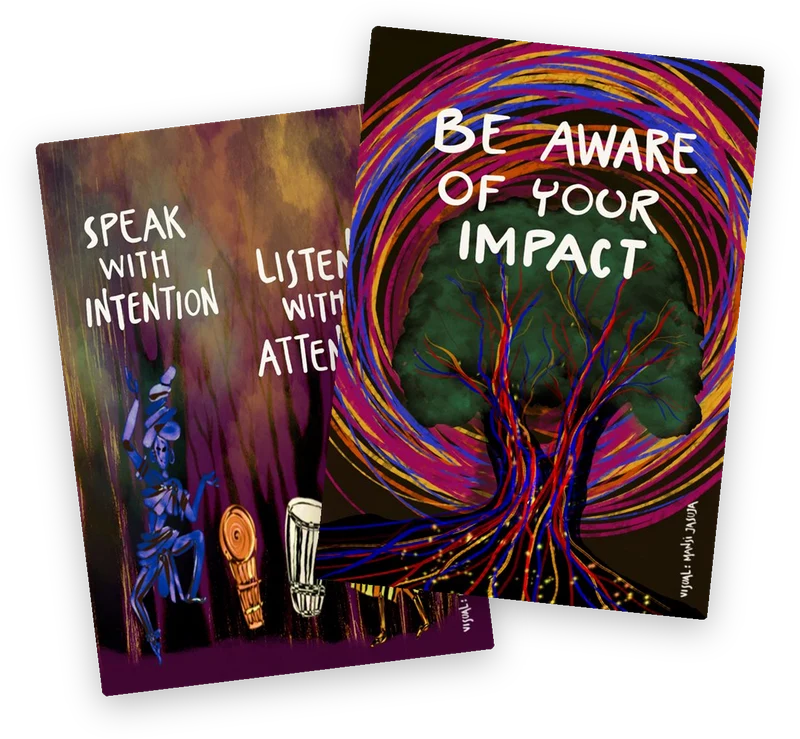
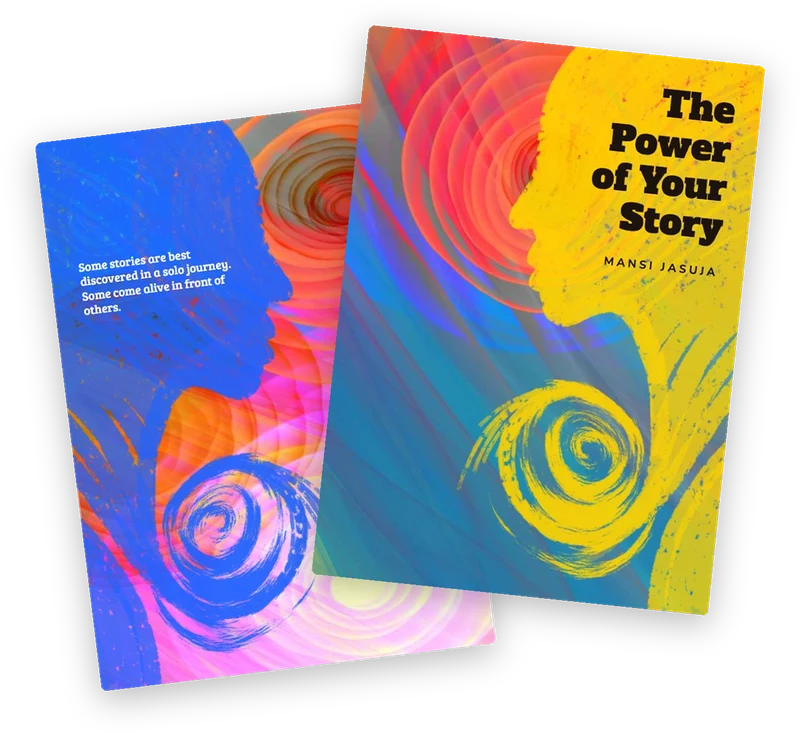
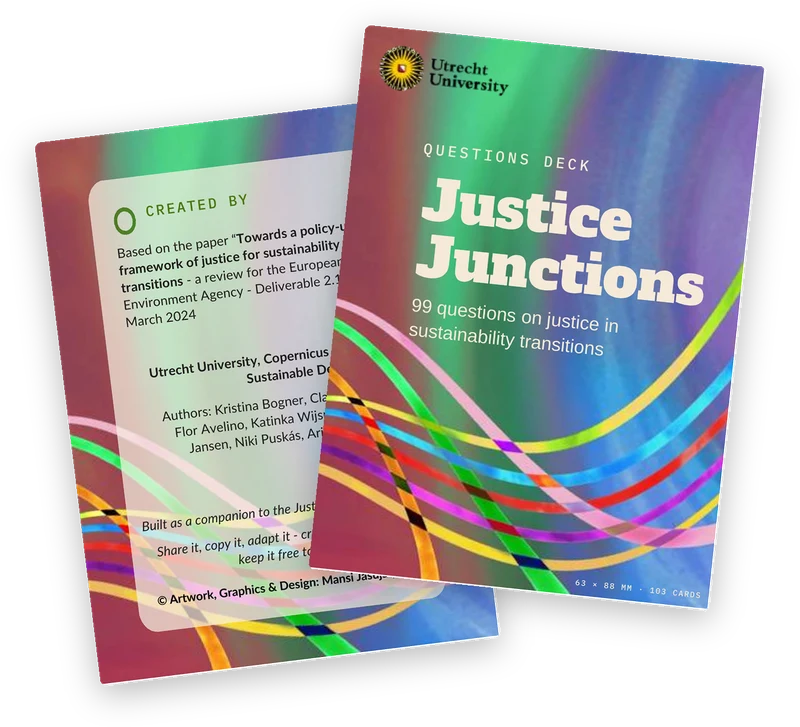
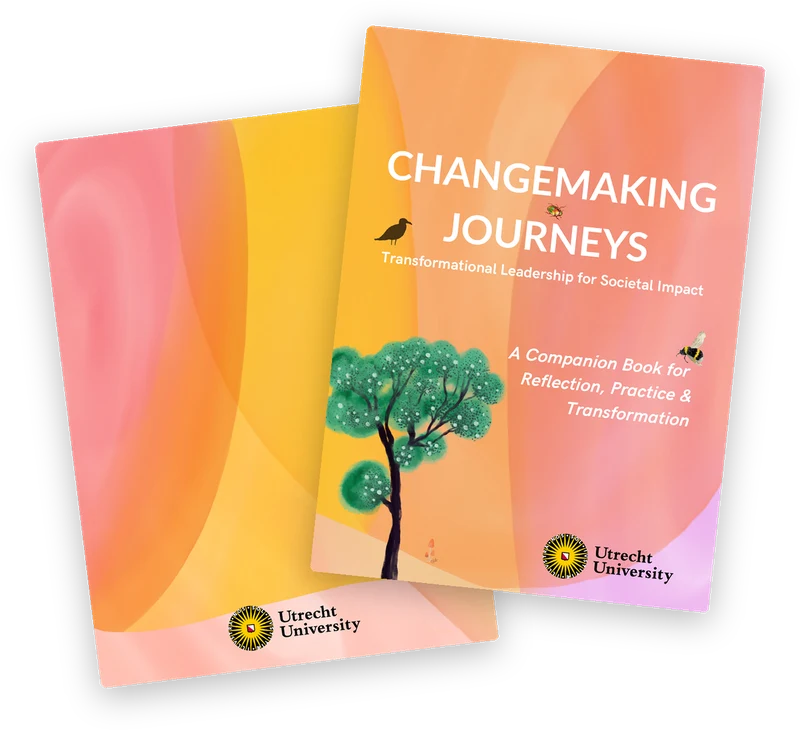
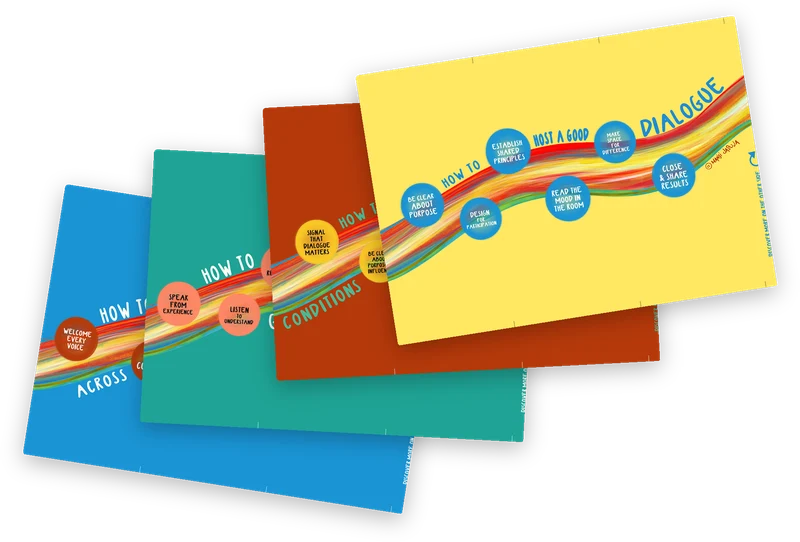
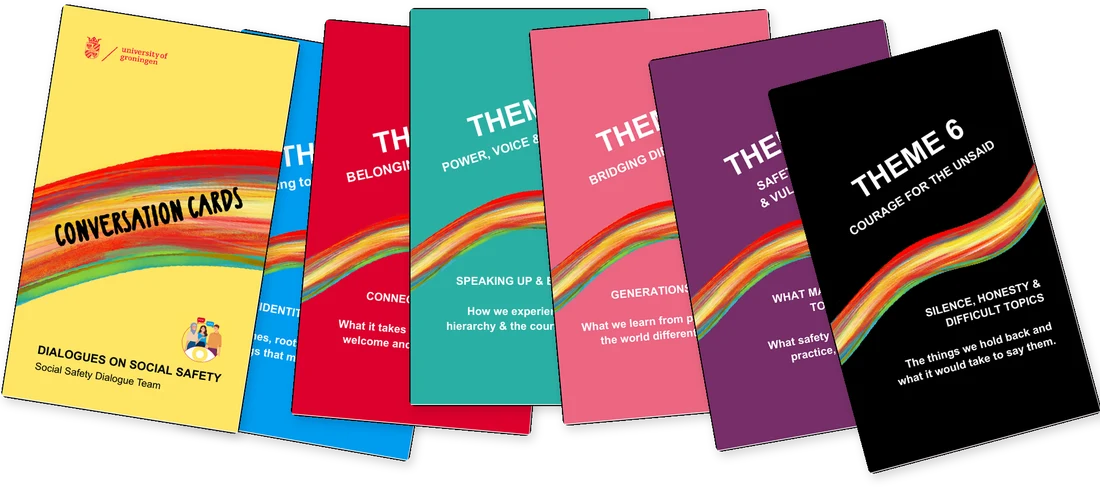
Examples of work I've produced for organisations. In conversation, we can also co-create other harvest materials, such as guidebooks, journals or card decks.
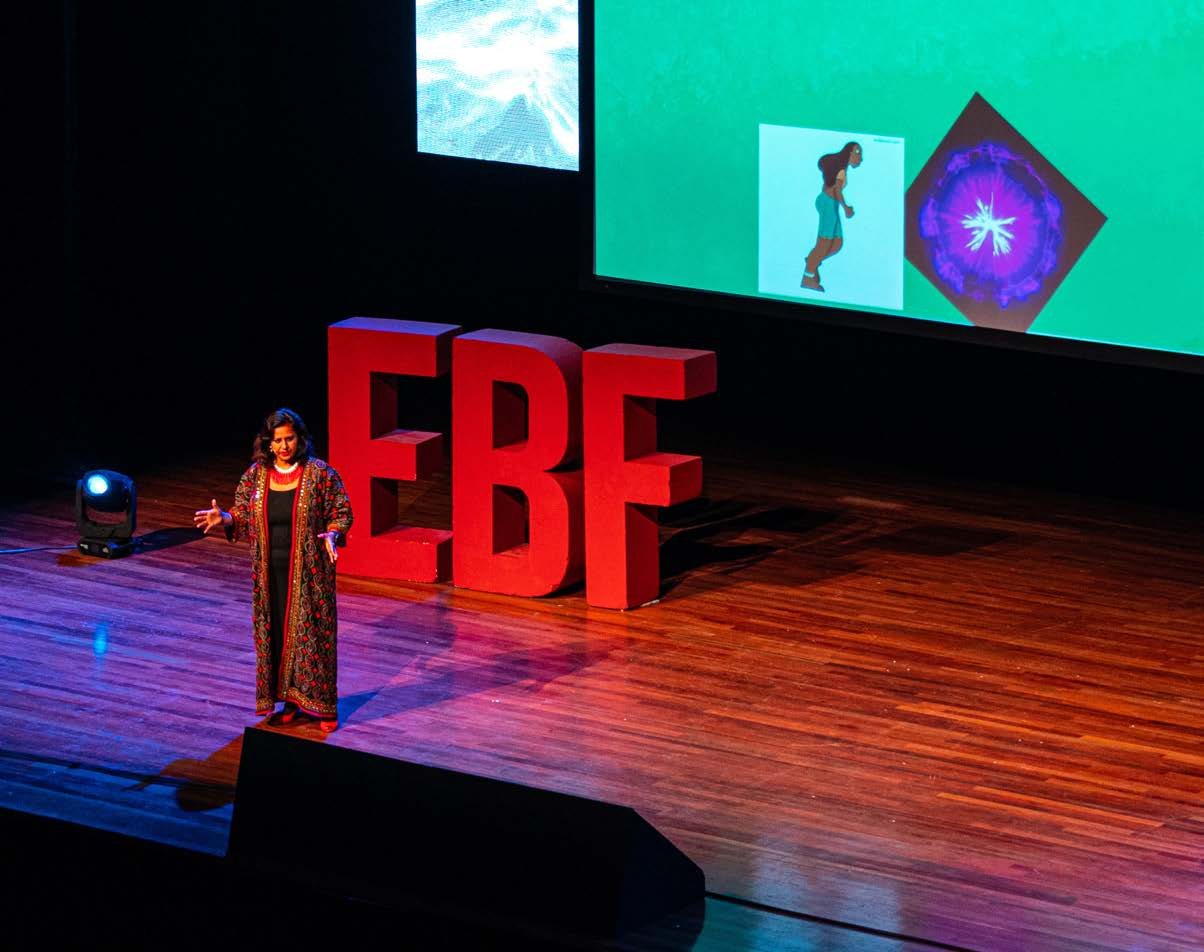
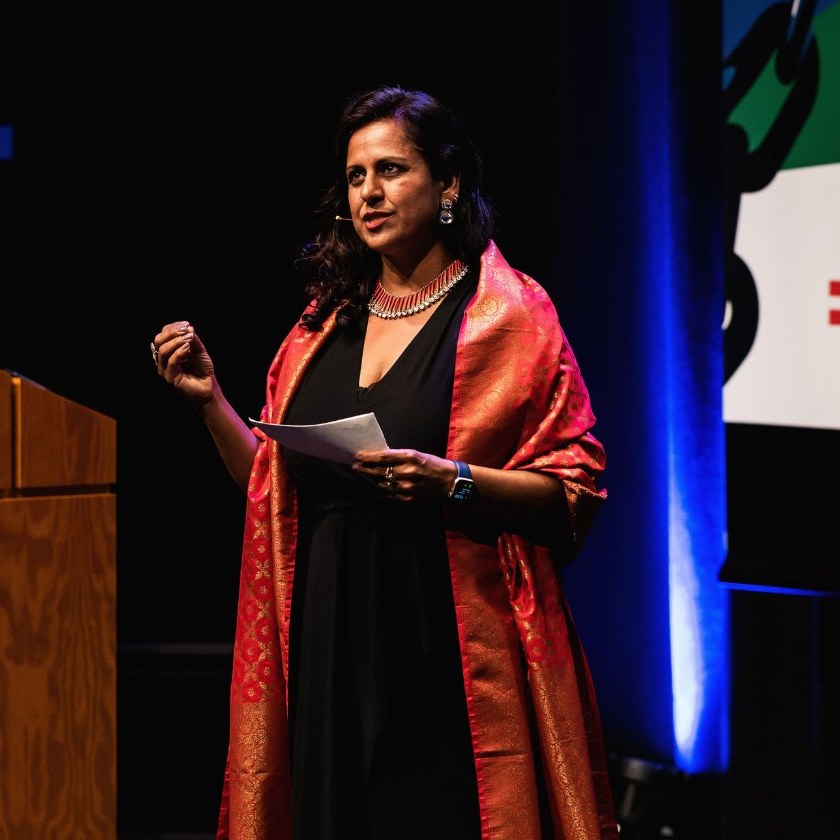
I'm a regular guest on podcasts exploring participatory leadership, living systems, and what it means to host in complexity. Here are a few:
If you're working on something complex or dealing with uncertainty, get in touch!
Let's